Firefighter Cancer Bill Fails by a Single Vote
By Gordon Hopkins
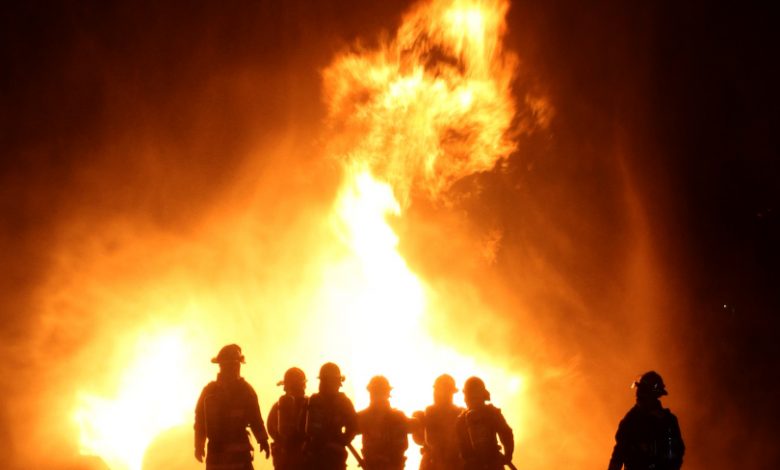
A bill intended to provide compensation under the Nebraska Workers’ Compensation Act for cancers experienced by Nebraska firefighters failed to get past cloture in the Nebraska Legislature by a single vote.
A motion to close debate and send the bill to be voted on required a minimum of 33 votes. The motion failed on a 32-15 vote.
According to the statement of intent for LB (Legislative Bill) 400, “Cancer that results in either temporary or permanent disability or death is now an occupational disease and is compensable as such. This applies to firefighters who were exposed to carcinogens or reasonably know human carcinogens during the course of their employment or service.”
The bill was introduced by Senator Dave Wordekemper, who has pointed out that the International Agency for Research on Cancer classifies firefighting as a Group 1 carcinogen, meaning the highest level of cancer risk.
Burden of Proof
The primary impact of the bill would have been to shift the burden of proof for the cause of cancer from the firefighter to the employer. In other words, any cancer a firefighter is diagnosed with would have been presumed to be work-related unless proven otherwise. Currently, firefighters with cancer must prove the cancer is work-related before they are eligible for benefits. Given the nature of the disease, that can be difficult, if not impossible in some cases.
To support the bill, Senator Wordekemper sited a number of different studies, “NIOSH, National Institute for Occupational Health and Safety, in 2013 researchers reported a twofold excess of malignant mesothelioma, a rare cancer. Firefighters have 100 percent increase of getting mesothelioma. Firefighters have 129 percent increased risk of dying from it.”
Wordekemper cited a 2006 study done by Grace Lemasters University of Cincinnati College of Medicine, “There was a twofold excess for testicular cancer, 62 percent higher risk of getting esophageal cancer, 39 percent increase of dying from it.”
The senator also cited a study that was done in 2017 at the Blais Laboratory at the University of Ottawa, Canada, which “Examined chemical exposure during emergencies on shift fire personnel suppression. The researchers found firefighters absorb harmful chemicals, including polycyclic aromatic hydrocarbons that comes from the smoke and it’s absorbed through our skin. Firefighters had from three to five more times the amount of this by product in their urine after the fire compared to before.”
Opposition
Opponents, led by Senator Mike Jacobson, raised concerns about increased costs for municipalities and volunteer fire departments, potential unfunded mandates, and the bill’s impact on property taxes.
“This bill is not necessary,” said Senator Jacobson. “So, I don’t understand why the requirement, the burden of proof, would be on the other side. If you believe that the cancer was caused from workplace, prove it. The employer should not have to prove that it was not workplace related.”
Jacobson said, “What will happen if this would pass is, the number of claims, anyone with cancer on the job will file a workman’s comp claim. Consequently, premiums for workman’s comp will go through the roof. So, this unfunded mandate then becomes a taxpayer problem.”
“This is not good public policy, this is not good for the taxpayer and it doesn’t seem right. This is just another case where we have another year that goes by and the paid firefighters are wanting something more than they already have,” added Jacobson.
Senator Wordekemper disputed that assessment, “There is no new cost created by this bill. There is no new system. There is no blank check. There is no free handout. The claims are already being filed. The city’s already retained lawyers to fight them. The only question is, who carries the burden at the start of the litigation, and right now, it’s the firefighter who is dying of cancer.”