Mysterious Dog Illness Reaches Nebraska
By Gordon Hopkins
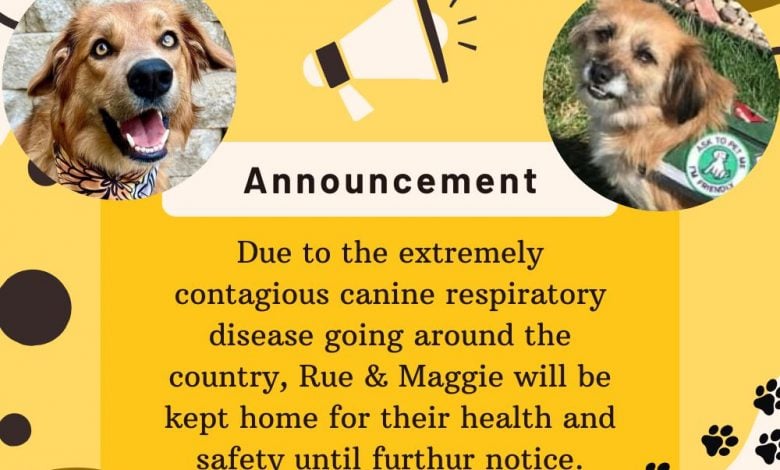
Concerns over an outbreak of an unidentified canine illness spreading across the U.S led Southern District Schools to recently announce that therapy dog Maggie McKinney and comfort dog Rue Hulse would no longer be at the school.
Southern posted on social media, “Due to the extremely contagious canine respiratory disease going around the country, Rue & Maggie will be kept home for their health and safety until further notice.”
Outbreaks of the disease, which does not yet have a name, have been reported in 15 states so far. The first case of the illness in Nebraska was reported this week by a veterinarian in Omaha.
The disease starts out as a cough that can last for several weeks, but it may not respond to typical treatment, such as antibiotics, which can leave the dog struggling to breathe and with severe pneumonia.
While the disease is potentially fatal, local veterinarian Dr. Jonathan Winter tells people not to panic, “The canine respiratory disease endemic that has broken out in small pockets across the United States has been made out to be worse than it truly is. While it is true that some dogs have died from this disease a vast majority just have a persistent cough for 6- 8 weeks.
The vexing part is that the veterinary community has not been able to isolate a single common pathogen that links these cases. This also means that some fatalities may not be related. A few different types of bacteria and a couple of different viruses have been isolated but not consistently.
That being said, we do know that this unknown canine respiratory disease is contagious. There are things that concerned pet owners can do from a preventative standpoint. The best advice that I can give dog owners is to make sure that their dogs are current on their vaccinations, not only Bordetella but also their Distemper, Adenovirus 2 and Parainfluenza (the distemper/ parvo combination vaccine).
These efforts ensure that your dog’s immune system is better prepared to fight infectious diseases. Additionally, do not take your dog to large gatherings with lots of other dogs and do not let them share water bowls with other dogs. Avoiding contact with other dogs minimizes your pet’s exposure to potential disease. In any case, if your dog is experiencing trouble breathing; a constant, persistent cough; or has a fever, contact your veterinarian. All local veterinarians will be able to assess your pet and determine the best treatment options.”
According to Kathleen Aicher, a veterinarian who specializes in internal medicine for dogs and cats at Texas A&M University, many dogs respond to treatment, those that do not can deteriorate rapidly, “In the areas of the country that are reporting this right now, they’re really going through a difficult time.”
According to a recent story in Scientific American, “Veterinarians compare it to ‘kennel cough,’ a term used to describe several viral and bacterial infections that can cause a sudden, honking cough in dogs. But whereas kennel cough usually clears up, the recent infections have resulted in pneumonia and even death. One research team has pinpointed a bacterium with an odd genome as a potential source.”
Dr. David Needle, pathology section chief at the College of Life Sciences and Agriculture at the University of New Hampshire, said of the pathogen, “It’s smaller than a normal bacterium in its size and in the size of its genome. Long story short, it’s a weird bacterium that can be tough to find and sequence.”