“Predator Sting” Case Will Go Forward
The court case against a Fairbury man caught up in an amateur “predator sting” will move forward despite doubts expressed by the man’s attorney about the legality of the charge.
Donald D. Boomgaarn Jr., age 25, appeared in Jefferson County Court on Wednesday, December 2, 2024, for a preliminary hearing. Linda Bauer was the presiding judge.
Boomgaarn is charged with attempted child enticement, a class 2 felony punishable by one to 50 years in prison.
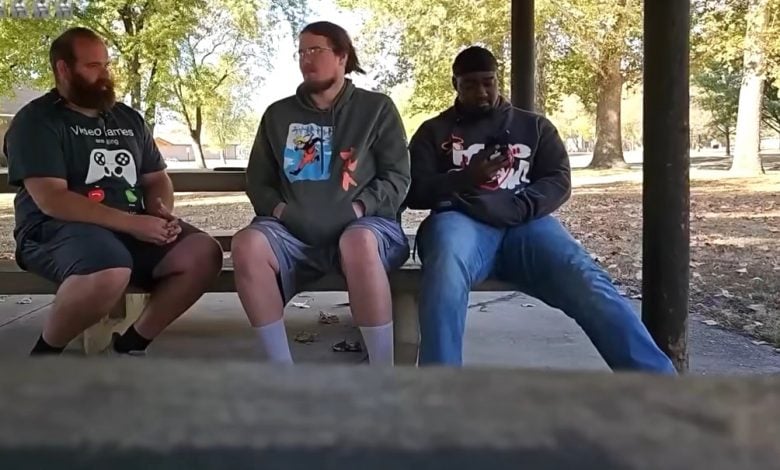
On October 16 of this year, the Jefferson County Dispatch received a call from a Houston-based vigilante organization called Predator Poachers Southeast Texas that conducts sting operations on adults who seek sexual activities with minors, advising that they had conducted such a sting operation in the Fairbury City Park and had an individual that they met there that they claimed was seeking to meet with a minor.
All evidence that the organization had was turned over to the sheriff’s office, which initiated their own investigation into the matter.
The defendant is represented by attorney Paul Payne, who pointed out that, according to Nebraska Revised Statute 28-320.02, in order to be found guilty, the person being “enticed” must be either 16 years of age or younger, or it must be a peace officer (law enforcement officer with arrest authority).
FJN recently spoke with Alex Rosen, one of the individuals from Predator poachers who conducted the sting. He said he was aware of the statute, “In Nebraska, we’ve had pretty good success despite the statute.”
Predator Poachers has conducted multiple stings in Nebraska but none of the related convictions have actually been for child enticement. Instead, in those cases, law enforcement conducted their own investigations and uncovered child pornography.
Rosen acknowledged, “All of our convictions in Nebraska have actually been child pornography convictions and child pornography arrests.”
That is not the case with Donald Boombaarn, who has not been accused of possessing such prohibited materials.
In court, Jefferson County Attorney Joseph Casson explained, “Your Honor, this is somewhat of a unique situation in that, as council has pointed out, the individuals who gathered the information relevant to the case were not law enforcement officers. As a result, this charge is filed as an attempt, because the circumstances that the defendant believed that he had been involved in are what constituted the crime, whether the individual impersonating a minor was a long-term officer or not. That again, the attempt, I think, is the state’s workaround on that aspect of the case.”
“I have to agree with council’s characterization that this is a workaround,” said Payne. “This rubs me the wrong way, the way this is charged. The statute is very clear. It has to be either a minor that’s being enticed or a police officer.”
Payne told the court, “The only question that I have, and I frankly have struggled finding the correct answer to that, is whether the general attempt statute here is applicable in the fashion that the state is trying to apply in here? I applaud the creativity. I don’t think that creativity is what we’re looking for in criminal statutes or criminal statutory interpretation.”
Defendants charged with a felony are entitled to a preliminary hearing to determine that there is sufficient evidence that a felony was committed and that it was committed by the person charged. Rules of evidence are different that for a trial and the threshold is much lower.
Judge Bauer did not issue a decision at the time. Instead, she took the matter under advisement and issued her decision later that day.
“Following a review of the case law, the court finds that in enacting attempt liability, our state’s legislature was primarily concerned with the dangerous disposition of the actor. Following that line of reasoning, attempt conduct must be corroborative of the defendant’s criminal intent,” Judge Bauer wrote in her decision. “Based on the limited evidence presented at the preliminary hearing, the court finds that the defendant did intend to entice a child less than 16 years of age and could have accomplished that if the attendant circumstances were as he believed them to be.”
The case had been bound over to District Court.
The defendant remains free on a $25,000 (10 percent) bond.