Schools Must Adapt To ShortageFor Special Education Teachers
By Gordon Hopkins
Like nearly every other industry, both in the public and private sectors, schools have struggled to maintain a full staff with the ongoing workforce shortage. This can be particularly impactful for students with special needs.
There was a time when students with special needs such as autism or disabilities were simply removed from classrooms, citing “behavioral problems.” However, over the decades, various state and federal laws, such as the No Child Left Behind Act of 2001, have been enacted to ensure all children receive an education. This does mean that specialized educators are required for special education, or “SPED” students.
Despite this, three elementary schools in Omaha, Martin Luther King Elementary, Walnut Hill Elementary and Central Park Elementary, have all cut special education services.
In order to prevent such a thing happening here, local schools are having to adapt.
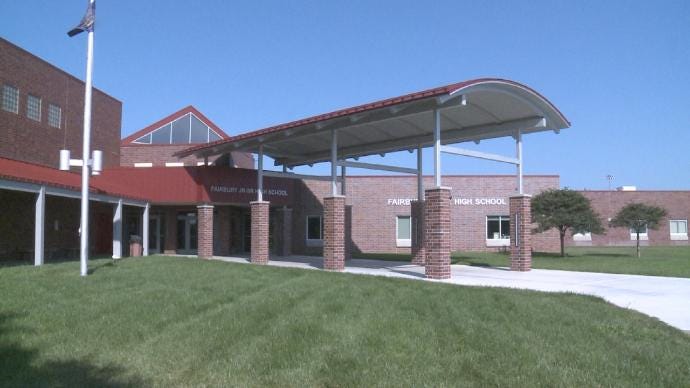
Fairbury
Sean Molloy, Superintendent of Fairbury Public Schools, told FJN, “Like other school districts, we are not immune to staffing shortages in general. We have been fortunate to hire several special education teachers to fill important positions. We’ve also had staff willing to accept new roles and responsibilities in order to serve special education students.”
Molloy pointed out that, like many others sectors, increased salaries are one tool to attract and maintain qualified staff, “Two years ago, the Board of Education decided to start awarding stipends to student teachers. We award three $9,000 stipends per year. These stipends are meant to help us fill high need positions. Of course, the long-term goal is for student teachers to stay in Fairbury and continue teaching after graduation.”
Tri County
Tiffanie Welte, EdD, Tri County Public Schools Superintendent, indicated that when there is an unfilled vacantcy, other educators have to take up the slack, “Tri County did have a late resignation last spring in our special education department that we have been unable to fill. Fortunately, we have been able to shift some duties around with remaining staff to cover our students’ needs at this time.”
Diller-Odell
Mike Meyerle, Superintendent of Diller-Odell Public Schools, said, “We had a para retire at the elementary, and absorbed the position. We will hire back if we feel it is necessary, but we had a number of changes in graduation of Sped students and students transitioning to the 7-12 building.”
Meyerle hopes that the passage of a school funding bill by the legislature will make a difference, “The new funding should help with increased state reimbursement. Will see how how it all shakes out. No major changes here. Thus far, we have no problems hiring staff for teaching or para positions.”
Southern
According to Southern School District #1 Superintendent Dr. Christopher Prososki, “At Southern we had one open SPED teacher and we were able to fill it. Based on the 20-22-2023 Nebraska Teacher Shortage report, there were 143 SPED position filled last school year. This has been the case for many years because there is a lot of paperwork associated with this position and this is typical struggling learnings. To put it another way, if was not good at baseball and did not like to play the sport, but I was forced to do it every year, I imagine that I may not always be fun to be around.”
Dr. Prososki is less optimistic that the new funding bill will improve the situation, “Open Sky, a non-partisan think tank, recently published…the complicated calculations involved in funding Nebraska’s K12 schools and it featured Southern’s numbers. As you can see from their analysis, there were definitely winners and losers associated with LB 583, and Southern was a loser.”