TC Energy Releases Initial Results of Keystone Oil Leak Investigation
By Gordon Hopkins
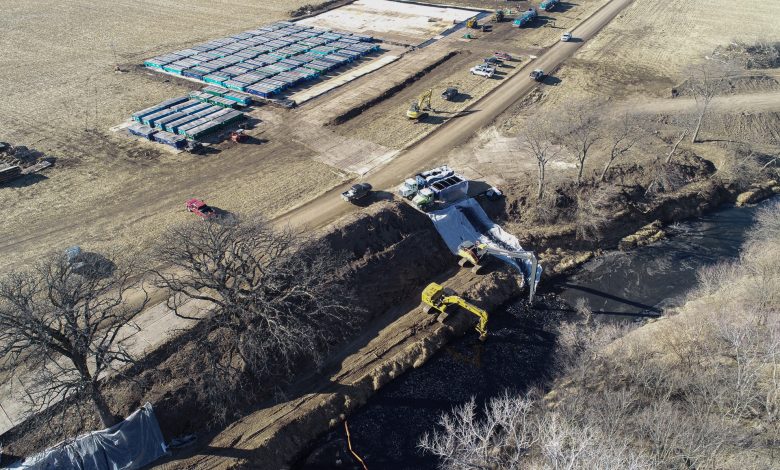
TC Energy, the company formerly known as TransCanada Corporation, has released the initial findings of the investigation into the cause of the oil leak into Mill Creek, near Washington, Kansas, and approximately 20 miles south of Steele City, on December 7, 2022.
The 2,687-mile Keystone Pipeline System transports up to 622,000 barrels of crude oil from Alberta, Canada, to the Midwest and the Gulf Coast. The Steele City facility is a key junction for the pipeline.
Multiple Factors
The blame is being placed on a weld flaw and bending stress.
TC Energy issued a statement on Thursday, February 9, “We have advanced our root cause investigation with the completion of an independent mechanical and metallurgical analysis of the failed pipe. The analysis concludes that the failure occurred due to a combination of factors, including bending stress on the pipe and a weld flaw at a pipe to fitting girth weld that was completed at a fabrication facility.”
TC Energy also noted, “The metallurgical analysis identified no issues with the strength or material properties of the pipe or manufactured fitting. The pipeline was operating within its operational design and within the pipeline design maximum operating pressure.”
The company has revised estimates of the total amount of oil spilled to 12,937 barrels, down from early estimates of 14,000 barrels. The revised volume is the measured volume of crude oil injected during the re-fill of the pipeline system during its restart.
Per TC Energy, the investigation is continuing, “Although welding inspection and testing were conducted within applicable codes and standards, the weld flaw led to a crack that propagated over time as a result of bending stress fatigue, eventually leading to an instantaneous rupture. The cause of the bending stress remains under investigation as part of the broader third-party root cause failure analysis.”
Concerns About Transparency
On Monday, February 6, religious leaders and environmental activists held a vigil at the Kansas Statehouse in Topeka, demanding greater transparency from TC Energy. Also in attendance was Kansas Representative Lindsey Vaughn, who called for a hearing in the State Legislature.
A number of early news reports featured photos and video taken from a drone flying over the site. Since that time, the airspace over the spill site was restricted by the FAA (Federal Aviation Administration). The no-fly zone has been extended several times. As of now, the site remains off-limits to the public.
FJN reached out to TC Energy and asked the reason the restriction remains in place. A spokesperson responded, “We have established a no-fly zone over the incident site to ensure the crews working around the clock on the incident are distraction-free. Clearing the airspace is critical for the safety and security of the pilots conducting ongoing monitoring as well as the working crew on the ground.”
The spokesperson also said, “Our focus continues to be on the safe remediation process at the site. The established no-fly zone offers the safest way to effectively progress the work. The no-fly zone will be reconsidered in the future.”
Some public officials have expressed concern about the restricted airspace, such as Representative Vaughn, who said, “Third-party drones — if they’re not going to be allowed to monitor the site, then I think there has to be other ways that media or third parties can have greater information or access to what’s going on because that’s one of the best ways to hold all parties accountable for the best outcome possible.”